How to Choose the Best Soft Head Watercolor Pen?
Choosing the right Soft Head Watercolor Pen begins with more than color variety or attractive packaging. It requires attention to fiber softness, water control, pigment behavior, barrel comfort, and drying time. A brush tip should glide like a damp paintbrush, yet remain responsive when pressure changes. That balance is easy to describe and surprisingly difficult to judge.
Industry data supports this growing interest in accessible art tools. Grand View Research’s Art Supplies Market analysis identifies rising demand for convenient, portable, and beginner-friendly products. The report also connects market growth with creative hobbies and at-home artistic activities. Smithers’ packaging research highlights another relevant concern: users increasingly notice material quality, labeling, and product durability. These findings matter because a beautiful pen can still leak, fray, or produce uneven color.
Small details matter.
This guide examines the practical factors behind a reliable Soft Head Watercolor Pen. It considers tip construction, ink flow, blending performance, color saturation, lightfastness information, and storage needs. ACMI safety labeling and ASTM D-4236 compliance can provide useful reassurance, especially for educational or studio settings. However, certification does not guarantee a perfect drawing experience. I have found that a pen performing smoothly on cotton paper may feel scratchy on a coated sketchbook. Personal technique changes the result, too. Some recommendations may therefore need reconsideration after real testing. A careful comparison should include quick gradients, thin lines, broad strokes, and several minutes of continuous use. This approach turns marketing claims into visible evidence.
What Is a Soft Head Watercolor Pen?
How to Choose the Best Soft Head Watercolor Pen?
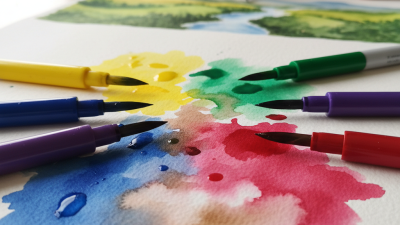
A soft head watercolor pen has a flexible brush tip, usually made from synthetic fibers or shaped nylon. Its internal reservoir holds water-based pigment. Gentle pressure creates thin lines. Firmer pressure produces wider strokes. The tip behaves more like a small brush than a marker.
This design helps artists paint leaves, lettering, shadows, and quick gradients without carrying a water cup. I have found that the tip’s spring matters more than softness alone. A weak tip may spread like wet grass and lose its point. A firm, responsive tip gives better control on rough paper. The 2024 Grand View Research analysis of the global arts and crafts market estimates continued growth through 2030, suggesting stronger interest in accessible creative tools. That trend does not guarantee quality.
Look closely at three details: tip recovery, ink flow, and barrel comfort. The tip should return to shape after a wide stroke. Pigment should flow steadily, not burst after storage. A textured grip helps during ten-minute lettering sessions. The ASTM D-4236 labeling standard is useful for checking art-material health information, although it does not measure brush performance. Paper also changes everything. Smooth watercolor paper shows cleaner edges, while soft paper absorbs color quickly. My own mistake was judging a pen on cheap notebook paper. It looked dry, but the paper was the problem. Test one light wash and one dark stroke before choosing.
Which Features Define a High-Quality Watercolor Pen?
How to Choose the Best Soft Head Watercolor Pen?
A high-quality watercolor pen should offer a soft, responsive tip that bends without losing its shape. In practice, the best tips create both hairline strokes and broad washes. Test the pen on textured paper. A reliable fiber or nylon tip should release color evenly, without sudden dry patches. It should also recover quickly after firm pressure. I sometimes prefer a slightly flexible tip, although it can feel less precise for tiny details.
Ink flow is another important feature. Look for a pen with consistent saturation from the first stroke to the last. The barrel should show the remaining ink clearly, which helps during long sketching sessions. A secure cap prevents the tip from drying between uses. Check that the grip feels stable, especially when your fingers are wet. Some pens feel comfortable at first but become slippery after several minutes.
Tips: Try three pressures on watercolor paper: light, medium, and firm. Watch for broken lines, flooding, or slow color recovery. Test the pen horizontally and vertically. Read the product’s material and safety information before regular use. A simple water test can reveal uneven flow. Do not judge softness alone. A very soft tip may create beautiful washes, yet it can frustrate beginners who need control. Personally, I still prefer a balanced tip over the softest option.
How to Match the Pen Tip to Your Painting Style
How to Choose the Best Soft Head Watercolor Pen?
How to Match the Pen Tip to Your Painting Style
A soft head watercolor pen should match your natural painting pressure. If you prefer delicate flowers, choose a fine, flexible tip. It creates narrow stems and crisp leaf veins with light pressure. For loose landscapes, a broader tip works better. Press gently for thin lines, then increase pressure for wider strokes. This control helps you paint clouds, hills, and flowing water without changing tools.
Your painting speed matters, too. A responsive tip suits quick sketches and expressive lettering. A firmer tip offers more stability for detailed illustrations. I often test a pen on textured paper before starting a finished piece. The same tip may feel smooth on cotton paper but scratchy on inexpensive sheets. That difference is easy to overlook. I also watch how quickly the tip returns to its shape. A soft tip that stays flattened can make repeated strokes uneven.
Tips: Test three pressures on scrap paper. Draw a hairline, a medium stroke, and a full-width mark. Check whether the ink flows evenly after each pause. For beginners, medium-flexible tips are usually forgiving. They support practice without hiding pressure mistakes. Clean water and paper quality also affect results. My first choice is not always right, and that is useful feedback. A short trial often reveals more than attractive packaging.
How to Compare Ink Flow, Color, and Water Capacity
How to Choose the Best Soft Head Watercolor Pen?
Ink flow should match your hand speed and paper. A soft head that releases ink too quickly can flood small lettering. One that hesitates creates pale gaps and scratchy edges. Draw ten slow lines, then ten fast lines. Watch the first stroke, middle stroke, and final stroke. The best pen stays fairly consistent. My early mistake was judging flow from one short sample. That was not enough. Tip pressure changes everything.
Color needs more than visual brightness. Test a wet swatch beside a dry stroke. Check whether the pigment stays clean or turns dull after drying. Compare light, medium, and heavy pressure. A useful reference is ASTM D-4236, which supports evaluation of art-material labeling and safety information, not color performance itself. Read the technical sheet carefully. Names such as “vivid” are not test results.
Water capacity affects working time and portability. Measure how many full washes one pen produces before the color weakens. Use the same paper and brush pressure each time. TAPPI T 441 measures paper water absorption through a 60-second Cobb test, reported in grams per square metre; paper can therefore change your results substantially. A 2024 Grand View Research analysis estimated the global writing-instruments market above USD 20 billion in 2023, showing the category’s scale, but market size cannot prove pen quality. I still prefer a slightly imperfect swatch test over promotional claims.