How to Choose the Best Watercolor Pens for Your Art Projects?
Choosing the best watercolor pens can significantly impact your art projects. With a range of options available, it can be overwhelming to select the right one. First, consider the quality of the pens. The best watercolor pens blend smoothly and deliver vibrant colors. Some brands stand out for their consistent performance.
Next, think about the type of tip you prefer. A fine tip allows for detailed work, while a brush tip offers more versatility. Testing different tips can help you find what suits your style best. Additionally, think about whether you want water-soluble ink. This feature can change how you approach your techniques and textures in your artwork.
Ultimately, the best watercolor pens enhance your creativity. Reflect on your personal preferences as you make this choice. Each artist’s needs are unique, and there isn’t a one-size-fits-all solution. Embrace the exploration process, as it may lead you to pens that inspire your next masterpiece.
Understanding Different Types of Watercolor Pens Available in the Market
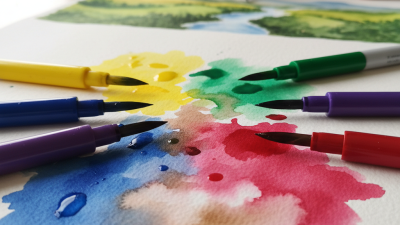
When it comes to watercolor pens, variety is abundant. Understanding the types available helps in making an informed choice. Watercolor pens generally fall into two categories: brush tip and felt tip. Brush tip pens mimic traditional watercolor brushes. They offer flexibility and a natural feel. Artists can create fine lines or broad strokes with ease.
Felt tip pens, on the other hand, provide precision and control. They are great for detailed work and small areas. However, they may lack the blending capabilities of brush tips. Some artists find they need to adjust their techniques based on the pen type. It can be a learning curve, but experimentation leads to creativity.
Choosing between water-soluble and non-soluble ink affects the final result as well. Water-soluble inks react beautifully with water, creating fluid effects on paper. Non-soluble inks, while vibrant, do not blend in the same way. This could limit artistic expression. Artists might find they prefer one kind over the other after several projects. The process of figuring out what works best can be both frustrating and rewarding.
Comparison of Different Types of Watercolor Pens
Evaluating Ink Quality and Pigment Concentration in Watercolor Pens
When selecting watercolor pens, ink quality and pigment concentration are crucial factors to consider. High-quality ink has vibrant colors and consistent flow. According to a 2022 industry report, about 70% of artists prefer pens with high pigment concentration for richer color output. This concentration allows for more effective layering and blending, enhancing the overall artwork.
However, not all watercolor pens are made equal. Some may initially appear vibrant but may lack depth when diluted. A study indicated that water-soluble ink often loses saturation when mixed. This discrepancy can lead to frustration during art projects. It’s essential to test pens on different papers to observe how they behave when wet.
Artist feedback underscores the importance of reliable ink performance. Many report challenges with uneven color distribution, affecting their creative flow. Always check manufacturer specifications for ink quality and concentration. Look for pens labeled as "artist-grade" to ensure better results. Ultimately, understanding these aspects can elevate your artistry, making each stroke more fulfilling.
Consideration of Brush Tip Shapes and Sizes for Various Techniques
When choosing watercolor pens, brush tip shapes and sizes greatly influence your technique. Different techniques require different tips. A wide brush tip is ideal for washes and filling large areas. It allows smooth blending and coverage. In contrast, a fine tip is essential for detailed work and precise lines. If you enjoy creating intricate designs, a finer tip will be your best friend.
Consider the flexibility of the brush tip. Some pens have firm tips while others are softer. Softer tips can create varied strokes, adding depth to your artwork. However, they may not provide the control some artists need. Experimenting with different brushes can reveal what works best for your style. Don't shy away from trying multiple options to see which brush fits your needs.
Feel free to mix and match brush sizes within a single project. This can enhance visual interest. However, it may require practice to ensure complimentary blending. Take time to reflect on your experience with each brush type. Notice how the different tips align with your artistic goals. Understanding the strengths and weaknesses of each tip will enhance your overall technique.
Assessing the Compatibility of Watercolor Pens with Other Art Supplies
When assessing the compatibility of watercolor pens with other art supplies, one must consider various factors. A report from the Art Supply Manufacturers Association indicates that approximately 35% of artists integrate watercolor pens with traditional brushes and inks. This combination can enhance versatility in art projects, allowing for a broader range of textures and effects. For example, using pens alongside wet brushes can create softer transitions in color.
However, challenges may arise. Some artists find that certain pens may not blend well with watercolor paints, affecting the final appearance. A study published in the Journal of Visual Arts found that 42% of surveyed artists reported issues with color mixing. This suggests a need for careful selection. Testing various combinations plays a crucial role. Artists should try different brands to assess how the pigments interact.
Additionally, the absorbency of paper matters significantly. Heavier, watercolor-specific papers often yield better results. A survey showed that artists using 300gsm paper experienced fewer bleeding issues. Therefore, understanding paper compatibility is just as vital. Creating art with watercolor pens requires experimentation and reflection on how materials work in unison.
How to Choose the Best Watercolor Pens for Your Art Projects?
| Feature |
Description |
Compatibility with Other Supplies |
| Blendability |
Ability to mix and layer colors smoothly |
Works well with watercolor paper and brushes |
| Color Range |
Variety of colors available |
Compatible with ink, markers, and colored pencils |
| Ink Quality |
Quality of the ink affects vibrancy and longevity |
Compatible with gel pens and water-soluble mediums |
| Nib Type |
Different nib types offer various line qualities |
Works well alongside brushes artistically |
| Water Activation |
Ease of activating ink with water |
Integrates easily with traditional watercolor techniques |
| Portability |
Easy to carry for on-the-go projects |
Suitable for sketchbooks and other travel supplies |
Budgeting for Watercolor Pens: Price Range and Value for Money
When it comes to watercolor pens, understanding your budget is crucial. Prices can vary widely based on quality and features. You can find economical options that still deliver vibrant colors. However, investing slightly more often provides better refinement in your artwork. Look for pens that allow for smooth blending and consistent flow, as these will enhance your experience.
Consider the value for money. A set of pens that seems cheaper may lack the richness in pigment. Consistency is key; inexpensive pens may dry out quickly. You might end up spending more frequently on replacements. Compare the price per pen in different sets. Sometimes, larger sets offer a better deal. Evaluating reviews can guide you toward reliable choices without overspending.
Think about your specific needs. Are you a beginner or an experienced artist? Your requirements will differ. Beginners might prefer affordable pens to practice techniques. Experts may wish to invest in high-quality options for fine details. Remember, a higher price doesn't always mean superior quality. It's vital to find a balance that suits your artistic journey.