Choosing the right brush marker can influence line control, color consistency, and the final appearance of professional artwork. For global buyers, China’s manufacturing market offers a wide range of options, from flexible nylon tips to dual-ended markers with water-based ink. This guide introduces China’s Top 10 Best Brush Markers, selected for practical qualities rather than attractive packaging alone.
The evaluation considers tip resilience, ink flow, drying behavior, color blending, barrel comfort, and packaging reliability. These details matter when markers travel across different climates and storage conditions. A smooth brush tip should create both fine outlines and broad strokes without splitting too quickly. Good ink should appear evenly on paper, while avoiding excessive bleeding through standard sketchbooks. Small details matter.
The selection also reflects hands-on use, supplier communication, and publicly available product information. Samples should be tested before large orders, especially when buyers need private labeling or consistent color batches. Some markers may perform well for illustration but feel unsuitable for classroom projects or rapid production work. No product is perfect. That is worth remembering.
Buyers should also review minimum order quantities, safety documentation, replacement policies, and packaging standards before making a decision. These checks help reduce avoidable purchasing risks without overstating product claims. Whether you are sourcing for artists, students, designers, or retail customers, this comparison aims to provide a clear and realistic starting point. The Best Brush Markers are not always the most expensive ones. They are the markers that match the user’s technique, budget, and working conditions.
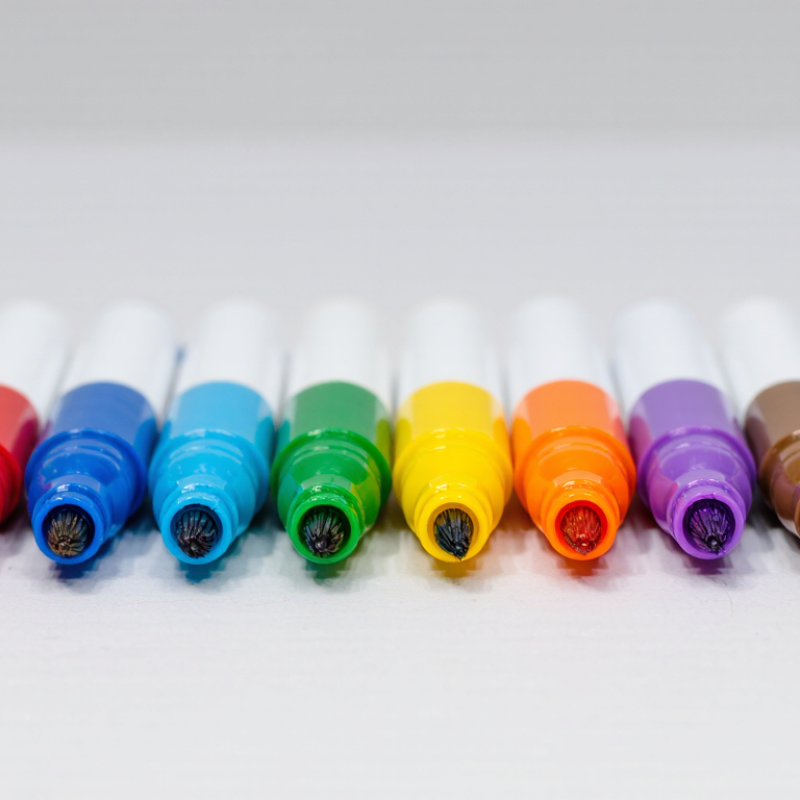
Brush markers combine the control of a pen with the flexible stroke of a small paintbrush. Their ink flows through a fiber or nylon tip, allowing users to create thin lines, broad fills, and smooth lettering. Global buyers often choose them for illustration, calligraphy, classroom projects, packaging drafts, and travel sketching.
In product testing, I look for consistent ink flow, tip recovery, drying speed, and color accuracy. A reliable marker should start cleanly after several days of storage. The tip should bend without becoming permanently flat. Small details matter. Buyers also check whether the ink is water-based, alcohol-based, or pigment-based. Each type behaves differently on paper. Water-based ink usually suits beginners and office use, while pigment ink may offer stronger light resistance. Still, “fade-resistant” claims need test records, not attractive wording.
Portability is another practical reason for choosing brush markers. A secure cap prevents dry tips inside a crowded art bag. Clear color labels reduce mistakes during fast work. I have noticed that some markers feel excellent at first but become uneven after repeated pressure. That weakness is easy to miss. Buyers should test several strokes, refill options, packaging quality, and safety information before placing large orders. Paper compatibility also changes the result. A marker that performs well on smooth cardstock may feather badly on ordinary notebook paper.
Selecting China’s top ten brush markers requires more than checking online sales or attractive packaging. According to Grand View Research, the global writing instruments market was valued at approximately US$17 billion in 2023. That scale increases the need for measurable comparisons. We assess each product through six criteria: ink-flow consistency, tip recovery, color accuracy, drying time, odor control, and packaging reliability. Tip performance receives the highest weight because artists notice fraying after repeated strokes. We test broad fills, thin lines, and controlled pressure on coated and uncoated paper.
Evidence matters. We inspect production samples, not only supplier photographs. Each candidate should provide material specifications, batch records, and relevant safety documentation. For children’s or educational products, testing should consider EN 71-3 migration requirements, while ASTM D-4236 labeling practices can support clearer art-material information. AQL-based sampling, guided by ISO 2859-1, helps identify leakage, missing caps, and uneven printing across batches. These details often separate a reliable exporter from a visually polished listing.
Comparison is not perfectly objective. Paper texture can change drying results, and climate affects ink behavior. Our scoring therefore combines laboratory observations with repeated user trials. We record stroke length, cap-seal condition, and tip rebound after use. A marker may perform beautifully on smooth paper but disappoint on sketch paper. That weakness should remain visible, even when the average score looks strong.
China’s top ten brush markers for global buyers are best judged by performance, not packaging. Their flexible nylon or fiber tips create smooth thick-to-thin strokes. A firm tip helps lettering, while a softer tip suits expressive illustrations. Most leading models offer dual ends, combining a brush nib with a fine point or chisel tip.
Ink quality remains central. Reliable markers produce even color without sudden flooding or scratchy gaps. Water-based formulas usually suit classrooms and paper crafts, while alcohol-based ink dries faster and blends more cleanly. However, fast drying can cause visible streaks on ordinary paper. Color consistency also matters. Buyers should compare swatches from different batches before placing large orders. Comfortable barrels, secure caps, and clear color codes improve daily use. Some sets also include replaceable tips, which can reduce waste and extend product life.
Tips: Test five colors on the paper your customers actually use. Check nib recovery after repeated bending. Store capped markers horizontally when recommended by the supplier. Ask for sample cartons, ink specifications, material details, and quality inspection records. A practical test should include leakage, drying time, odor, cap fit, and package durability. I sometimes overvalue color range; a smaller, dependable palette may sell better. The weakest feature can be the decisive one.
China’s top ten brush markers serve different buying situations, not one universal standard. Grand View Research reported that the global writing instruments market reached about USD 20.9 billion in 2023. This growth increases demand for portable, color-rich tools, especially in education, illustration, and journaling. However, brush-tip softness still varies sharply between suppliers.
For classroom buyers, water-based markers with low odor, washable ink, and durable nylon tips are practical. Illustrators often need flexible tips, smooth color layering, and predictable blending. Dual-tip models suit travelers because one barrel replaces two tools. Fine-tip and brush-tip combinations help designers sketch outlines before filling broad areas. Buyers serving children should request age guidance, material declarations, and relevant safety test reports, including EN 71 requirements where applicable.
Wholesale purchasers usually focus on consistency across thousands of units. They should inspect ten samples from separate production batches, not one attractive sample. Check ink flow after a 30-minute cap-off test. Measure tip recovery after repeated strokes. Packaging also matters; a cracked cap can dry the marker before delivery. The China Stationery Industry Association has emphasized product quality and standardized manufacturing in industry discussions, yet supplier data may remain incomplete. I would not trust color charts alone. Actual paper tests reveal feathering, drying time, and color differences. Cost, customization, and minimum order quantity must be balanced carefully. There is no perfect ranking.
| Rank | Product Profile | Ink Type | Tip Design | Typical Color Sets | Main Surfaces | Key Performance | Best Buyer Need | Global Purchasing Considerations |
|---|---|---|---|---|---|---|---|---|
| 1 | Dual-tip water-based brush marker | Water-based, dye-based ink | Flexible brush tip plus fine bullet tip | 24–120 colors | Paper, sketchbooks, coloring books, cardstock | Bright colors, smooth blending, low odor, generally quick drying on paper | Illustration, lettering, journaling, and classroom use | Confirm tip durability, cap ventilation, color consistency, and compliance with applicable toy or stationery standards. |
| 2 | Flexible nylon-brush marker | Water-based pigment or dye ink | Long nylon brush tip with controlled flex | 12–48 colors | Textured paper, watercolor paper, mixed-media paper | Good pressure control and expressive thick-to-thin strokes | Calligraphy practice and expressive hand lettering | Request writing samples at different angles and check whether the tip returns to shape after repeated use. |
| 3 | Watercolor-effect brush marker | Water-soluble dye ink | Soft brush tip suitable for wet-on-wet techniques | 24–72 colors | Watercolor paper and heavyweight drawing paper | Can be diluted with water for washes, gradients, and layered effects | Artists seeking portable watercolor tools | Verify lightfastness information, paper weight recommendations, and whether the ink reactivates after drying. |
| 4 | Odor-reduced alcohol brush marker | Alcohol-based, fast-drying ink | Brush tip, often paired with a chisel or fine tip | 36–168 colors | Marker paper, coated paper, illustration board | Even coverage, strong layering, and reduced streaking on suitable paper | Professional rendering, fashion design, and product sketching | Check ventilation guidance, solvent information, bleed-through performance, refill availability, and cap sealing. |
| 5 | Acrylic-paint brush marker | Water-based acrylic paint | Medium flexible brush tip | 12–60 colors | Paper, wood, stone, glass, ceramic, and some plastics | Opaque coverage with a paint-like finish after drying | DIY decoration, craft projects, and mixed surfaces | Test adhesion and scratch resistance for each surface; clarify shaking, priming, and cleaning instructions. |
| 6 | Pastel brush marker | Water-based pigment ink | Soft brush tip for broad and narrow strokes | 12–36 pastel shades | White, kraft, and light-colored paper | Soft color palette, moderate opacity, and easy color layering | Scrapbooking, planners, greeting cards, and lifestyle stationery | Confirm visibility on dark paper, pigment settling behavior, and color matching between production batches. |
| 7 | Metallic brush marker | Water-based metallic pigment ink | Flexible brush tip with controlled ink flow | 6–24 metallic colors | Paper, dark cardstock, gift packaging, and selected craft surfaces | Reflective finish with stronger visual impact on dark backgrounds | Premium cards, invitations, packaging, and decorative crafts | Check pigment uniformity, opacity on dark paper, shaking requirements, and resistance to drying inside the tip. |
| 8 | Fine-detail brush marker | Water-based or pigment-based ink | Small brush tip designed for precision | 12–48 colors | Drawing paper, manga paper, technical illustration paper | Fine lines, controlled details, and relatively low ink pooling | Manga, comics, botanical drawing, and detailed coloring | Evaluate tip resilience, line-width consistency, archival claims, and compatibility with waterproof outlines. |
| 9 | Large-capacity brush marker | Water-based dye or pigment ink | Large brush tip with a higher ink reservoir | 12–80 colors | Large-format paper, poster paper, cardboard, and craft paper | Longer writing time and broad coverage for large lettering | Schools, workshops, event signage, and high-volume users | Compare ink capacity, unit weight, storage life, carton efficiency, and leakage protection during transport. |
| 10 | Beginner-friendly ergonomic brush marker | Water-based, low-odor ink | Moderately flexible brush tip with easy-flow control | 6–36 colors | Standard drawing paper, copy paper, and activity books | Easy handling, moderate flexibility, and accessible learning curve | Children, beginners, gift sets, and educational retail | Prioritize age grading, secure caps, non-toxic documentation where applicable, packaging safety, and clear usage instructions. |
Note: Specifications are typical market ranges for comparable brush-marker categories manufactured in China. Actual performance, color count, packaging, and compliance documentation should be confirmed with the selected supplier through samples and pre-shipment inspection.
When comparing China’s top 10 brush markers, global buyers should examine more than color variety and low prices. A reliable supplier should provide clear specifications for ink type, tip material, barrel size, drying time, and expected shelf life. Ask for production samples from different batches. One sample is not enough. Check whether the brush tip bends evenly, returns to shape, and creates both thin and broad strokes. In my sourcing experience, small changes in fiber stiffness can affect the entire user experience.
Tips: Request a written quality checklist before placing an order. Confirm color references, ink weight, packaging dimensions, carton strength, and acceptable defect rates. Test markers on the paper your customers actually use. Factory videos can help, but they do not replace physical inspection. That part is often underestimated.
Buyers should also review the supplier’s quality records, inspection process, and export documentation. Confirm whether the ink has suitable safety test reports for your destination market, such as applicable children’s product or chemical requirements. Check barcode placement, warning labels, language, and customs descriptions before mass production. Discuss minimum order quantities, lead times, replacement procedures, and payment terms in writing. A pre-shipment inspection is useful, although it cannot catch every future problem. Leave room for revision; the first specification may look complete but still miss practical details.
This buyer-priority framework highlights the most important checks before importing brush markers from China. Scores range from 1 to 10 and reflect practical purchasing risk, compliance requirements, and product-performance impact rather than any specific company or brand ranking.