Leave Your Message
Choosing the 2026 Best Soft Head Watercolor Pen requires more than comparing colors, prices, or attractive packaging. Global buyers need a tool that performs consistently across sketchbooks, classroom projects, travel journals, and professional studies. The brush tip should bend smoothly, return to shape, and release color without sudden flooding. A stable water reservoir also matters, especially when artists work in dry climates or move between countries.
Watercolor artist and educator Eileen Sorg offers a practical reminder: “The best brush pen gives you control without taking away the movement of your hand.” This principle guides our evaluation of each Soft Head Watercolor Pen. We examine tip softness, pigment flow, blendability, drying behavior, barrel comfort, and packaging reliability. We also consider whether replacement units are easy to source internationally. Small details matter. A loose cap can ruin a travel kit.
Still, no pen is perfect. A very soft tip may create expressive strokes but feel difficult for beginners. A highly saturated ink may look beautiful at first, yet stain lighter washes. That trade-off deserves attention. Our recommendations combine hands-on use, product specifications, buyer feedback, and practical testing on cold-press and smooth watercolor paper. Some results may vary with paper texture, water quality, and storage temperature. That is worth admitting.
This guide helps distributors, retailers, educators, and individual artists compare leading options with clearer expectations. The goal is not to identify one universal winner. It is to find the Soft Head Watercolor Pen that fits each buyer’s technique, market, and working conditions.
2026 Best Soft Head Watercolor Pen for Global Buyers
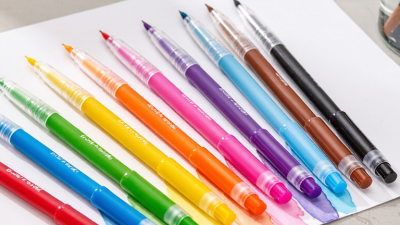
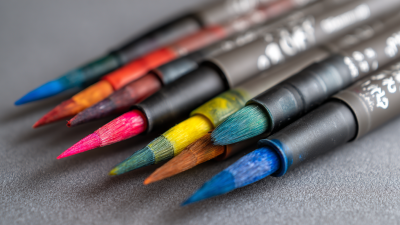
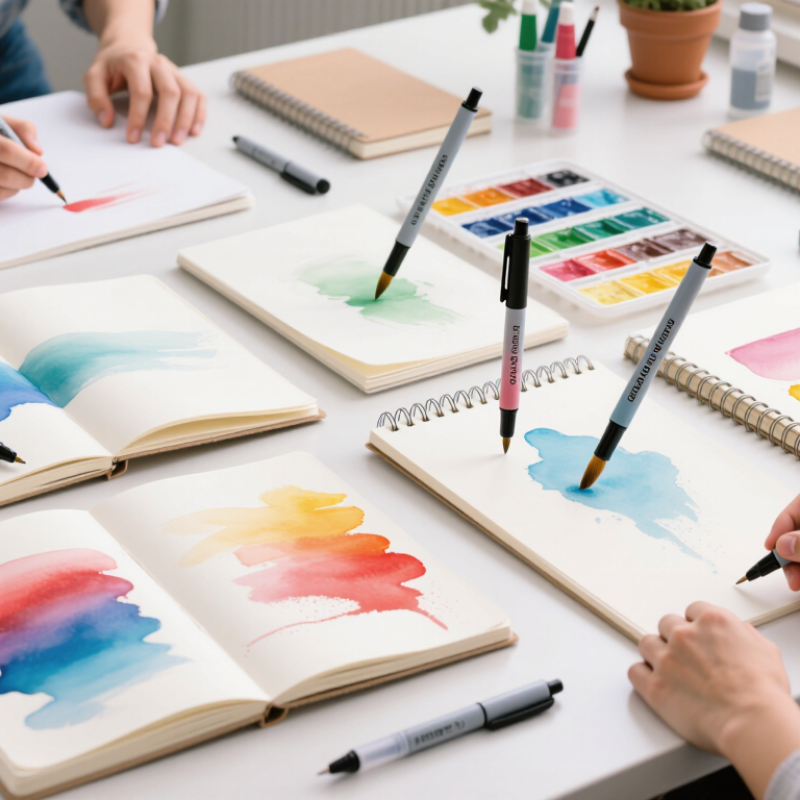
A soft head watercolor pen is a water-based drawing tool with a flexible brush tip. The tip bends under pressure, creating narrow lines or broad, painterly strokes. Unlike rigid fiber points, it supports controlled pressure changes. This makes it useful for lettering, illustration, travel sketching, and small color washes. Many models use nylon or synthetic fibers, while others use compressed felt. The difference matters. Nylon usually recovers its shape better after repeated strokes.
Key features include consistent ink flow, a sealed reservoir, pigment stability, and tip resilience. Buyers should test three details: the first stroke, the refill behavior, and the drying edge. A good pen starts smoothly without flooding the paper. It should also produce an even gradient when water touches the ink. In practical testing, lightweight barrels reduce hand fatigue during long lettering sessions. However, very soft tips can feel unstable for beginners. That weakness is real.
Grand View Research estimates the global writing instruments market will expand at about 5% annually through 2030. This growth supports demand for portable, multifunctional tools. The Research and Markets Art and Craft Materials Global Market Report 2024 also identifies hobby creativity and home-based making as continuing demand drivers. These reports do not measure soft watercolor pens directly. That limitation deserves attention. For global buyers, check ink labeling, drying performance, packaging protection, and paper compatibility before comparing price. A beautiful color chart proves little. Hands-on testing proves more.
| Evaluation Dimension | Definition or Typical Specification | Why It Matters to Global Buyers | Recommended Selection Standard |
|---|---|---|---|
| Product Definition | A soft head watercolor pen is a coloring pen with a flexible brush-style nib and water-based, water-soluble ink designed to create watercolor-like strokes. | It combines the portability of a marker with the blending and line variation associated with watercolor painting. | Choose products that clearly state the nib type, ink base, intended use, and care instructions. |
| Soft Brush Tip | Flexible synthetic fibers, commonly nylon or polyester, form a pointed or rounded brush tip. Tip flexibility varies by construction and fiber stiffness. | A flexible tip supports thin outlines, broad strokes, lettering, and controlled pressure-based variation. | For general use, select a tip that returns to its original shape after repeated bending and does not split during normal writing. |
| Line-Width Range | Typical brush-style pens can produce fine lines of approximately 0.5–1 mm and broader strokes of approximately 2–5 mm, depending on pressure and tip design. | A wider practical range increases versatility for illustration, journaling, hand lettering, and sketching. | Request writing samples made with light, medium, and firm pressure before approving a large order. |
| Ink Type | Most watercolor pens use water-based dye ink. The ink is generally water-soluble when wet and may become less blendable after drying. | Water-based ink is convenient for blending, layering, and use with a water brush, while drying behavior affects workflow. | Confirm whether the ink is washable, water-reactive after drying, non-toxic for the stated use, and suitable for the target paper. |
| Color Blending | Blending can be performed directly on paper, with a colorless blender, or with a damp brush or water brush. | Good blending performance helps users create gradients without carrying liquid watercolor paints and separate brushes. | Evaluate smooth transitions, color lifting, streak resistance, and the time available for blending before the ink dries. |
| Color Layering | Transparent or semi-transparent layers can build darker values, although repeated layers may affect paper texture and color clarity. | Layering performance is important for illustrations, botanical drawings, lettering, and tonal studies. | Look for consistent saturation and predictable darkening without excessive feathering or muddy color mixing. |
| Tip Durability | Durability depends on fiber material, bonding method, cap design, writing pressure, and the roughness of the paper. | A durable tip reduces deformation, customer complaints, and replacement costs during normal use. | Test repeated strokes, pressure changes, cap-on storage, and use on smooth and medium-texture paper. |
| Ink Capacity | Ink capacity varies by barrel size and internal reservoir. Many disposable pens are designed for single-use service, while some systems support refilling or replaceable cartridges. | Capacity affects service life, product value, shipping weight, and waste generation. | Compare usable writing length under a defined test method rather than relying only on reservoir volume. |
| Cap and Storage | A well-fitting cap helps limit evaporation and protects the brush tip from dust and mechanical damage. | Secure closure is especially important during international transport, warehouse storage, and retail handling. | Prefer caps with a reliable seal, clear open-close feedback, and a design that reduces accidental drying. |
| Drying and Bleed Control | Drying time depends on ink formulation, paper absorbency, temperature, humidity, and stroke thickness. Thin paper may show bleed-through. | Predictable drying helps prevent smearing and improves suitability for planners, notebooks, and layered artwork. | Test drying on the actual target paper and record smear resistance after approximately 30 seconds, 1 minute, and 5 minutes. |
| Paper Compatibility | Best results are normally obtained on watercolor paper, mixed-media paper, marker paper, or other smooth papers with suitable absorbency. | Paper compatibility influences color brightness, blending quality, feathering, warping, and bleed-through. | Offer guidance for paper weight and surface type; test both smooth and textured paper when selling to varied markets. |
| Barrel Ergonomics | A lightweight barrel with a comfortable grip supports controlled pressure and reduces hand fatigue during extended use. | Ergonomics affects the user experience for artists, students, children, and lettering users. | Check balance, grip diameter, cap posting, surface texture, and ease of identifying colors during use. |
| Color Identification | Color names, printed caps, end plugs, or color-coded barrels help users identify and organize pens. | Clear identification reduces picking errors and improves retail presentation and classroom organization. | Use legible color labels and provide a blank swatch area or color chart because printed cap colors may not match the actual ink exactly. |
| Safety Information | Safety details should cover the ink formulation, age guidance, intended use, storage, and relevant local labeling requirements. | Requirements differ by destination, product category, and intended user age; clear documentation supports responsible importing. | Obtain current safety and compliance documentation from the supplier and verify requirements in each target market before sale. |
| Packaging for Export | Protective packaging should prevent crushed barrels, separated caps, leaking ink, and tip deformation during handling and transport. | Packaging quality affects arrival condition, returns, shelf presentation, and total landed cost. | Use secure inner trays, moisture-resistant outer cartons, batch identification, and pre-shipment drop and vibration checks. |
| Best Overall Use | Soft head watercolor pens are well suited to sketching, journaling, coloring, hand lettering, card making, and portable watercolor-style artwork. | They are convenient for users who want controlled color application without a traditional paint palette. | Select a balanced set with fine-to-broad tip performance, consistent ink flow, practical colors, and clear usage instructions. |